Monster Mashup
Now playing: Project Frankenbot

It’s never ended well for Prometheus. Not in the classical world, not in modern times. A true titan, a real superhero, but then comes the fall. So much blazing ambition, such fiery rebel spirit, but somehow always programmed to crash and burn. He’s got the whole world in his hands, until it all goes smash.
You remember his original claim to fame from your favorite primer on the Greek gods and heroes. A trickster, a thief, a dissident god on our side. Pulled a fast one on Zeus, stole fire from the heavens and gave it to us mere mortals. Pissed off the Godfather big-time, wound up chained naked on a mountaintop with a vulture tearing out his liver all day all year round. Overnight his liver would grow back and the next day it was rip and repeat.
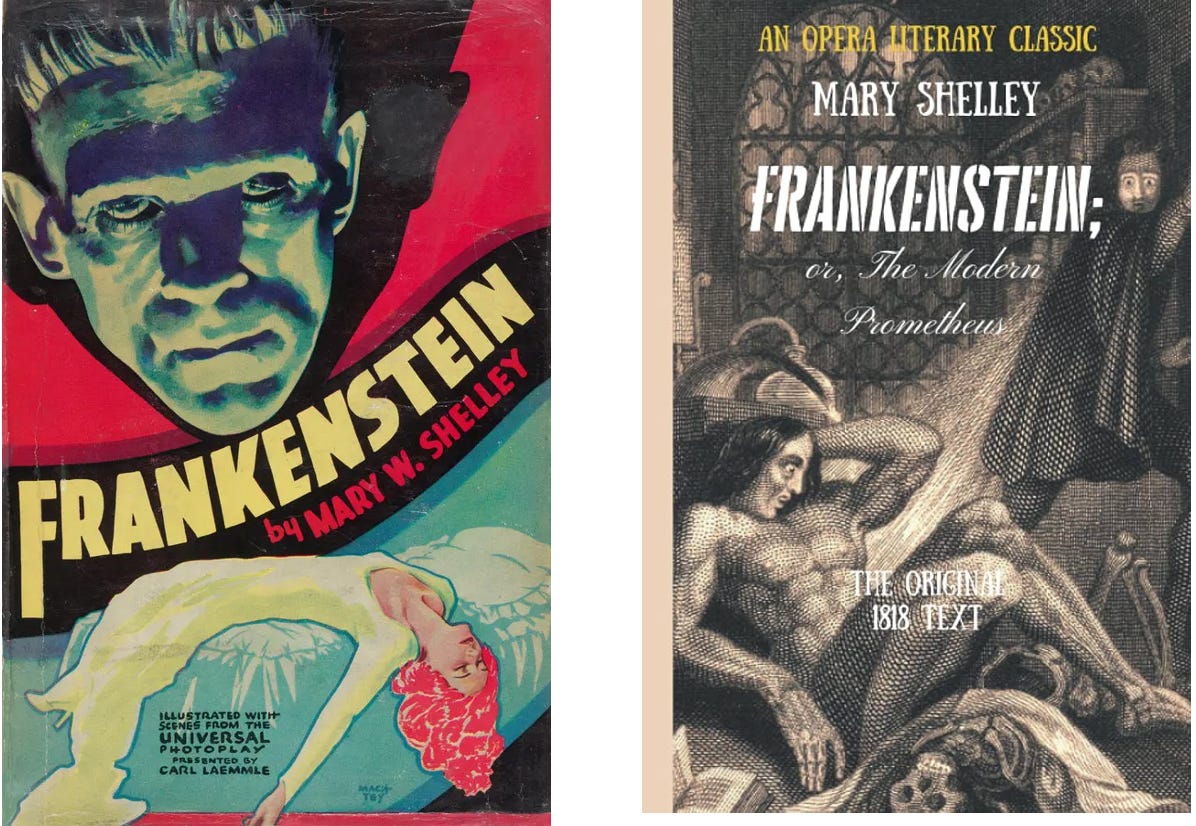
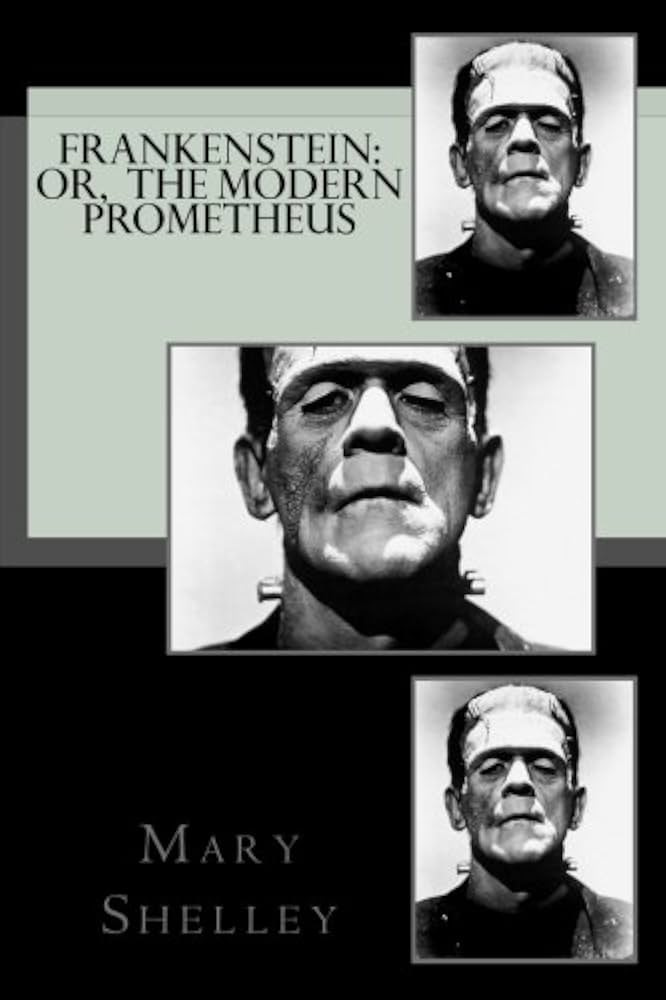
It didn’t end well for the modern Prometheus either. You know him by the name of Frankenstein, Dr. Frankenstein. The storied moniker all over the news cycle these days, thanks to the splashy release of Guillermo del Toro’s Oscar-tipped blockbuster based on Mary Shelley’s 1818 novel. You know, the sensational Gothic tome first published anonymously under the double-barreled title Frankenstein, or, The Modern Prometheus.
If that or catches you out, don’t beat yourself up. It hasn’t exactly held its own over the long haul. It never got a purchase on the popular imagination. Hollywood left it on the cutting-room floor. It dangles there like a vestigial appendage in the college library, and only the faculty lounge knows it’s gone missing.
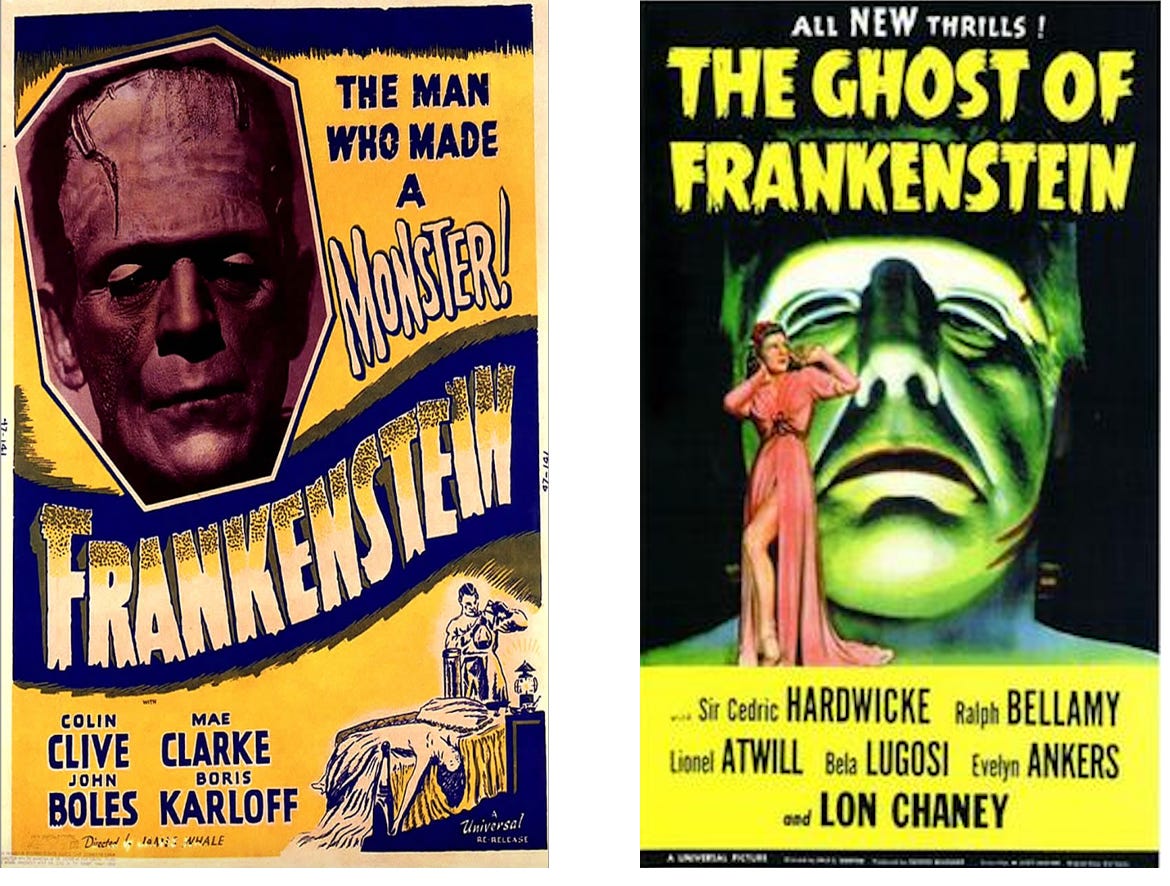
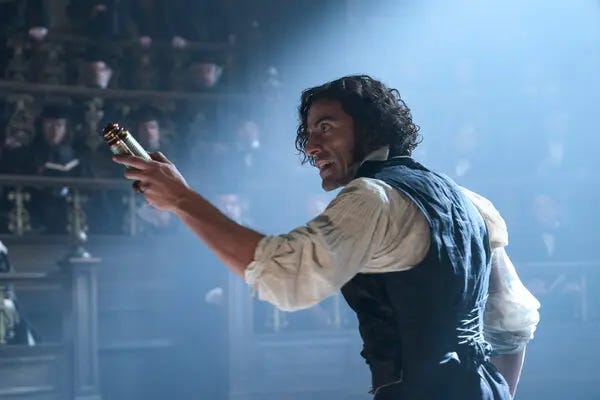
Maybe it’s time for a search party. Del Toro’s big-budget spectacle is only the latest of umpteen movie treatments and spinoffs since Thomas Edison produced his fright-night silent Frankenstein (“a liberal adaptation of Mrs. Shelley’s famous story”) at the dawn of moving pictures in 1910, but it may be the most devout effort yet to stay true to the novel’s Promethean bloodlines. Del Toro has gone on record as an incurable Mary Shelley obsessive, never mind that the author’s name and her original subtitle are nowhere to be found in the shock-and-awe teasers and trailers. The or is there by preternatural osmosis in the visceral aura and ardor of the remake’s torch-bearing take on monsters of our own making.
Make no mistake – that subtitle was no afterthought. It’s a mythopoetic handle with horsepower to burn. Promētheus, from the ancient Greek: “he who thinks in advance” or simply “forethought.” A wily deity always thinking three moves ahead, a Titan at war with Zeus’s upstart Olympians, a champion of mankind on the good authority of Hesiod and Aeschylus. Stealing fire for our forebears made his name, but in Ovid’s Metamorphosis and elsewhere he’s the one and only “wise Prometheus” credited with nothing less than creating us all out of clay.
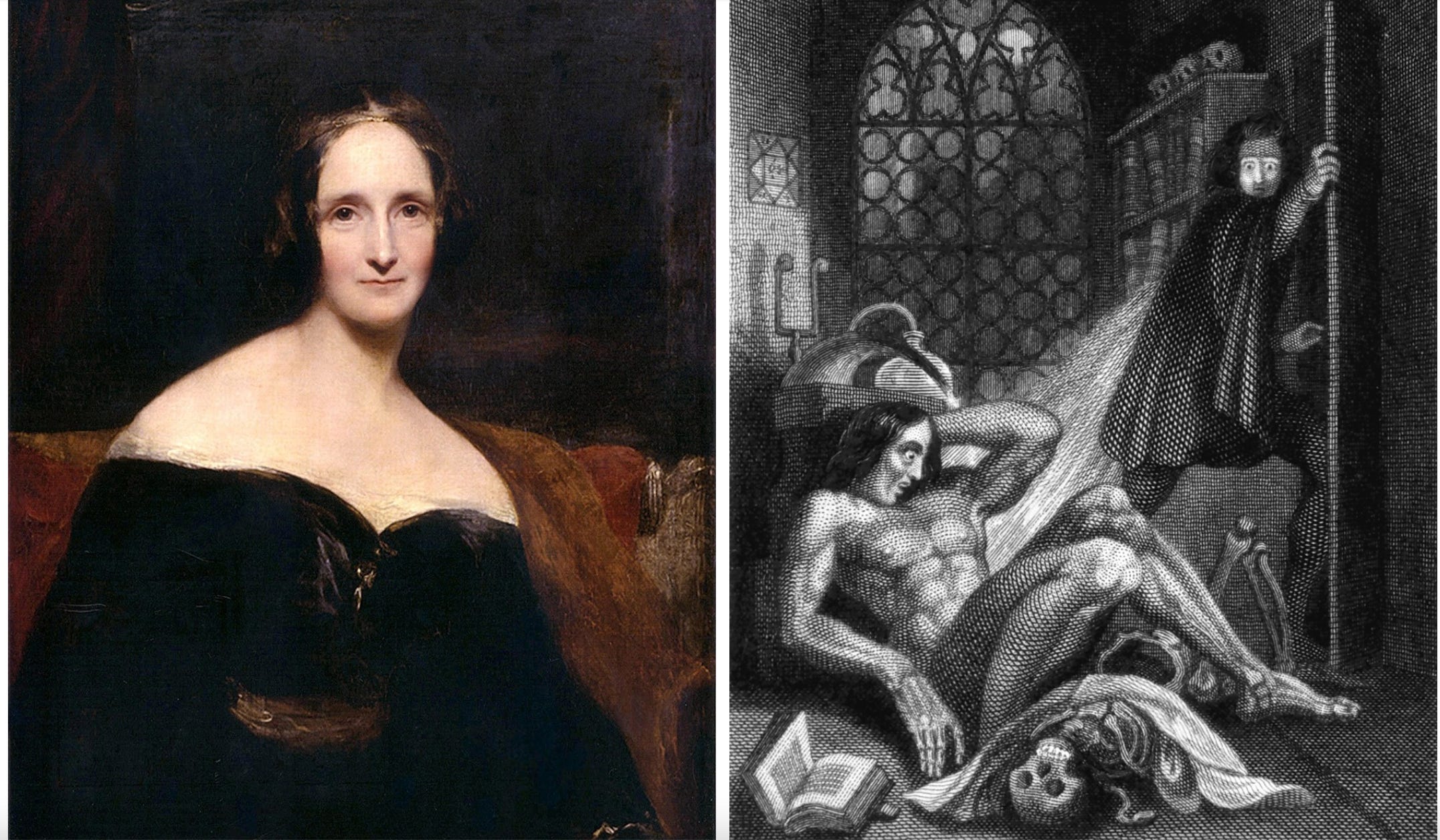
However you parse it, Mary Shelley’s or speaks volumes. She was still a teenager when she hatched her gripping tale on the shores of Lake Geneva one dark and stormy night, but she was an adept beyond her years. She wasn’t even Mary Shelley yet when she sojourned with still-married poet Percy at Lord Byron’s Villa Diodati in the summer of 1816. She was still Mary Wollstonecraft Godwin, a shooting-star nepo baby if there ever was one. The only child of radical English power couple William (Caleb Williams) Godwin and Mary (A Vindication of the Rights of Women) Wollstonecraft. A free-thinker’s free-thinker born and raised.
Not that anyone could have seen her seismic or coming. At first blush, it was just supposed to be a ghost story. A ghost story cooked up for a little ghost-story contest while on holiday. Her bid to out-spook the select company of bright young literary things in an impromptu parlor game upon a brooding alpine evening. His Lordship himself kicked things off by announcing “We will each write a ghost story.”
That’s the origin tale the author would tell the world fifteen years after the fact, fleshed out in the preface to the revised edition of her unputdownable modern fable. By then her fandom had raised a clamor for the back story, so sit tight: “I shall thus give a general answer to the question so very frequently asked me – how I, then a young girl, came to think of and to dilate upon so very hideous an idea.”
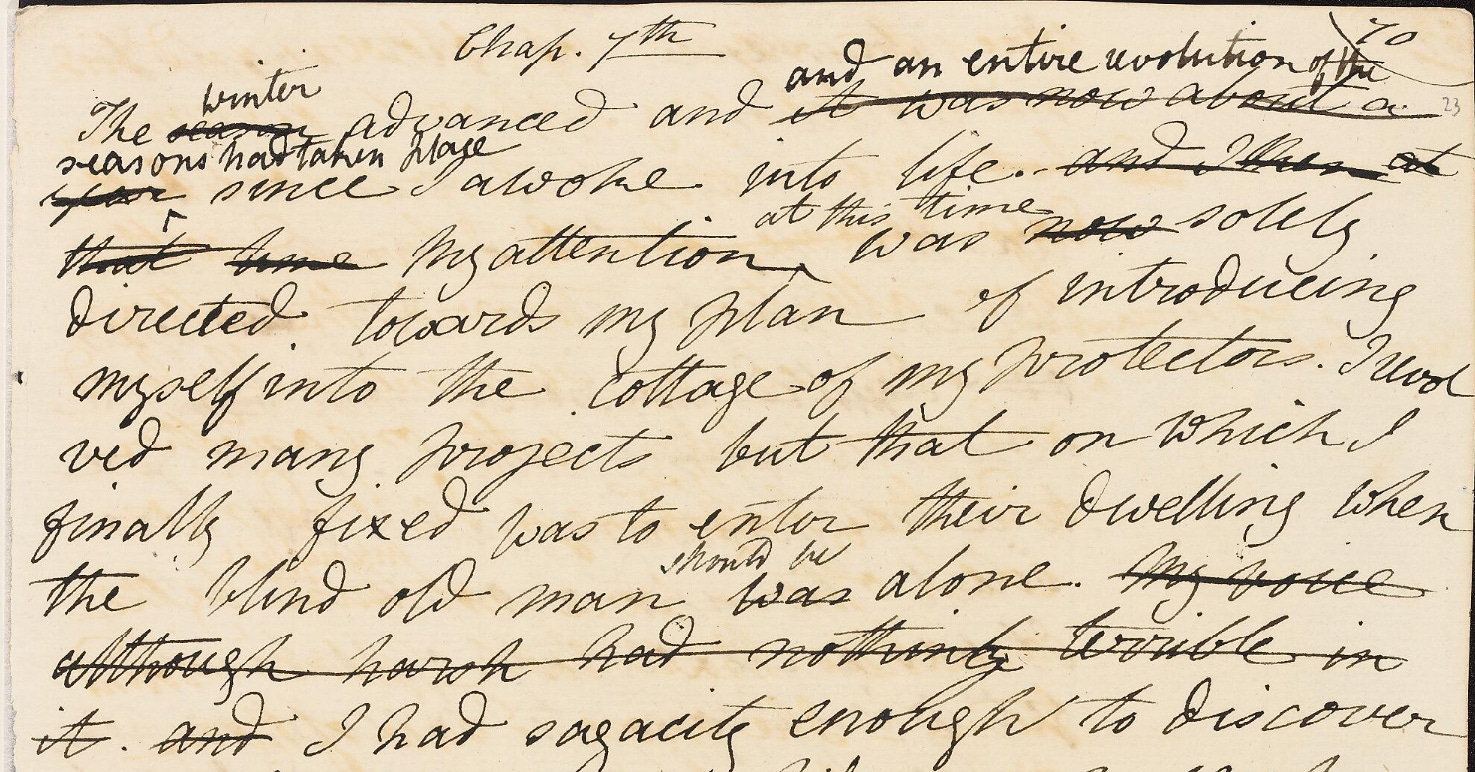
How young a girl was she then? All of 18. She was the youngest bright thing of them all. It was just supposed to be a ghost story, but she was an old soul and came loaded for bear. The opus she finished the next year was all kinds of spooky and so much more.
As she tells it in her preface, it came to her one night at the villa when she went to bed. She was seized by a vision. She remembers it like it was yesterday:
I saw—with shut eyes, but acute mental vision—I saw the pale student of unhallowed arts kneeling beside the thing he had put together. I saw the hideous phantasm of a man stretched out, and then, on the working of some powerful engine, show signs of life, and stir with an uneasy, half vital motion.
There’s your Modern Prometheus. That pale student of unhallowed arts. Frankenstein, Victor Frankenstein.The man, not the man-made monster. The mad scientist, not his tormented creation. The pale student’s hideous phantasm of a man, brought to life by way of some powerful engine.
It’s long been a case of mistaken identity, but don’t blame young Mary Shelley. Retrieving her subtitle from cold storage helps set things straight. Her phantasm has no name. Only in the movies. Stick with the book and you won’t be in the dark. The reader knows full well it’s the same monster-maker on both counts – Frankenstein, or, The Modern Prometheus – and that’s what makes it double-creepy.
“And now, once again, I bid my hideous progeny go forth and prosper,” the novelist wrote at the close of the 1831 preface. No sweat – by that time its staying power was already a lock. There was gold in that or. The unattributed first edition became a sleeper hit after it came out in 1818 (complete with a preface by a mysterious “Marlow”), spurring a series of boffo stage productions over the next decade. The Frankenstein prototype was rapidly acquiring a mythic status all its own, and nobody had seen anything yet.
Prometheus makes no appearance in either preface. The or does all the work. All the same, there must have been an undeniable Promethean electricity in the air. The “Marlow” of the 1818 edition was none other than Percy Bysshe Shelley, covertly blurbing his precocious wife. Two years on he would complete his own fullscale Prometheus Unbound, a brazen revisionist “Lyrical Drama in Four Acts” dedicated to the proposition that the longsuffering fire-stealer personifies “the highest perfection of moral and intellectual nature impelled by the purest and the truest motives to the best and noblest ends.”
It’s another day at the office for the English Romantic most likely to give you an ice-cream headache.The highest, the truest, the noblest, the purest. This isn’t your grand-dad’s vulture-chow in chains. Percy B’s Prometheus unbound is a Prometheus reborn as a poetic force of nature, the apotheosis of the moral and intellectual Romantic powerhouse. His only rival as an iconic “poetical character,” Shelley remarks in his preface, is Milton’s Satan, but it’s really not even close. Prometheus has just as much of the right stuff as the hero of Paradise Lost without any of the baggage, being “exempt from the taints of ambition, envy, revenge, and a desire for personal aggrandizement.”
You’d be tempted to call Percy’s unshackled archetype the very model of the modern Promethean spirit, until you cross paths with Mary’s. No superlatives in the offing here, and that sounds just about right. Victor Frankenstein is no superman. There’s not a pure or perfected bone in his body. He’s a dude playing god, cobbling a new life-form out of charnal-house cadavers and electric currents. He’s the Modern Prometheus as the proto-avatar of Big Science and High Tech.
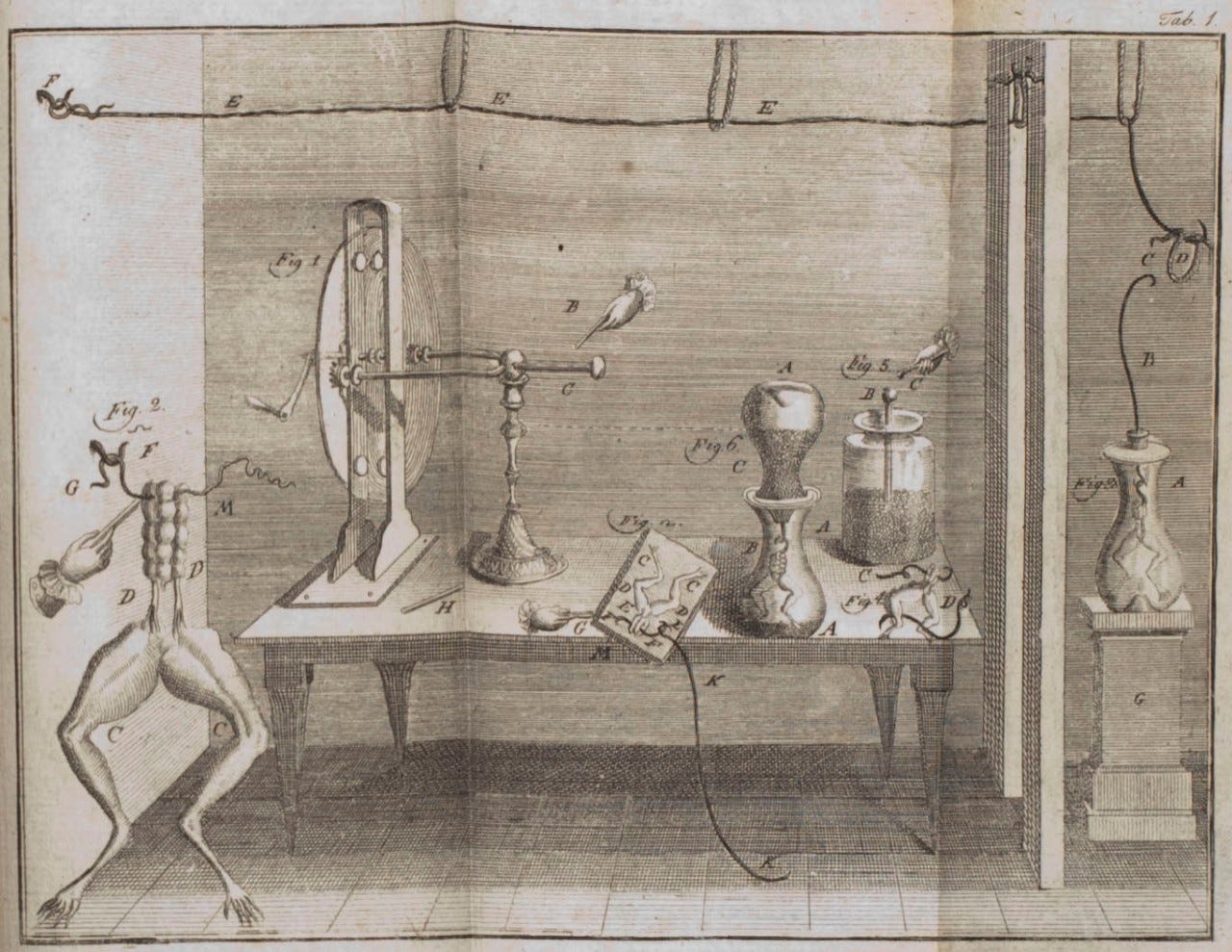
It’s turning on the juice that makes Mary Shelley’s Prometheus modern. It was then known as galvanism, and she knew all about it. She’d boned up on Luigi Galvani’s cutting-edge experiments with electric currents back in the 1780s, like that time he zapped the legs of dead frogs with electrodes to make them flinch and twitch. In her introduction to the 2025 reissued Vintage Classics edition of Frankenstein, neo-Gothic Mancunian novelist Jeanette Winterson quotes another snippet of the 1831 preface where Mary reverse-engineers how she came up with her imaginative premise: “Perhaps a corpse would be re-animated; galvanism had given token of such things: perhaps the component parts of a creature might be manufactured, brought together, and endued with vital warmth.”
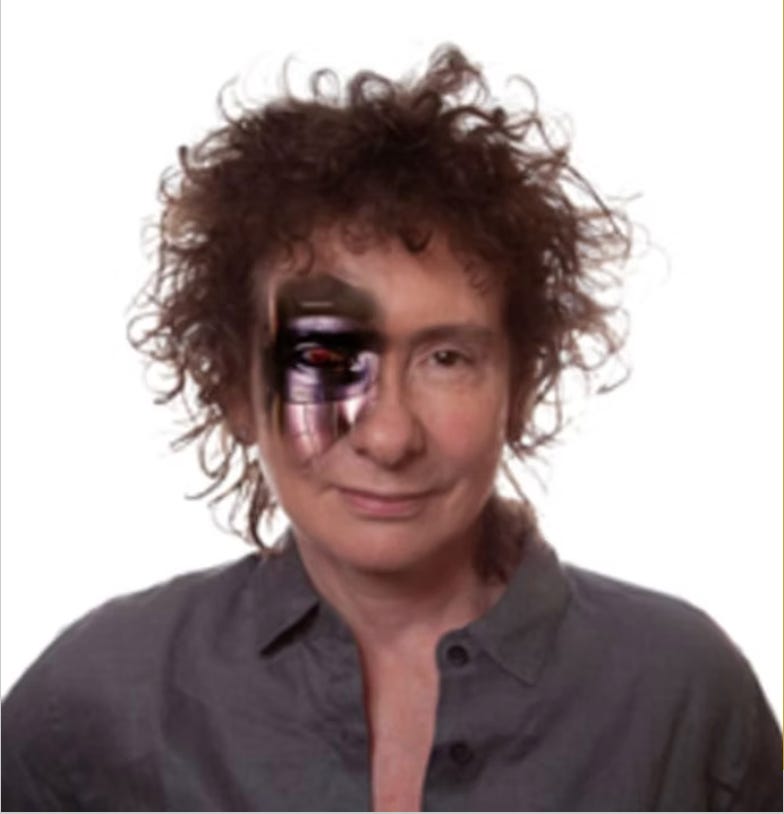
Perhaps it could, perhaps it would, and presto, there’s your Modern Prometheus. A new Prometheus, same as the old Prometheus, only this time playing with fire for keeps. The literary depth-charges aren’t lost on a novelist of Winterson’s eclectic bent. She’s all over that or:
The idea that the fire we steal from the gods is electricity is a startling insight. And what will be the punishment? Prometheus, chained to a rock, has his liver torn out, and renewed daily. But what if there is no God? What if we can only punish ourselves?
For Winterson it’s no academic question. She has a little history as a Frankenstein-whisperer. Her genre-and-gender-bending 2019 novel Frankissstein: A Love Story reboots the canonic horror thriller as an antic time-travel bricolage, crosscutting Mary Shelley’s origin story (Lake Geneva, 1816) with a sendup of Brexit Britain (AI, cryogenics, sexbots). She’s got skin in the game, and she sees the electrifying ur-text as a dark prophecy.
It’s a safe bet that’s why Vintage tapped Winterson for a new introduction to the perennial classic, all synched up with the A-list movie hype. Now more than ever she would have us crack the book for a shock of recognition. Victor Frankenstein pottering away in his steampunk lab with his primitive “instruments of life” might feel like far too hammy a period-piece to hit a nerve anymore, but that siren song Winterson hears is history rhyming in surround sound:
We are who Mary Shelley imagined we would be, more than two hundred years ago, when this nineteen-year-old woman vaulted across time. She landed here, with us, the first people on the planet to create a new kind of intelligence. An artificial life-form that we hope, or fear, will be faster, stronger, smarter. Not subject to the constraints of time as we are. A different kind of being. A different way of being.
End of paragraph, and here comes the next one ready or not. One of the shortest of all possible paragraphs, one word and that’s it:
AI.
There, she said it. Two itsy-bitsy letters, one little acronym with a big carbon footprint. Hovering there in the PDF white space, sucking up all the oxygen in every room where it happens. Two little vowels, one quantum leap into the void.
A for artificial, I for intelligence. You knew that, but Winterson is here to tell you that the term was coined way back in 1955 to distinguish the exponential metrics of electrically engineered computing power. Now everyone just says AI, a catch-all acronym for machines that cosplay as brains. Two little letters looming larger than ever, and Winterson takes them by the horns.
So here we are. Frankenstein meets AI. There, she’s said them in the same breath. Here’s Mary Shelley’s Modern Prometheus divining how to “bestow animation on lifeless matter,” and here we go again:
Victor Frankenstein must visit the charnel houses and graveyards for his collection of body parts. That’s how he gets going on his new life-form. We are learning how to do it using the zeros and ones of code. Both these new and hybrid forms of life – Victor’s monster, and maybe ours – are powered by electricity.
It didn’t end well that first time around. Frankenstein, or, The Modern Prometheus unspools as a tragic tale of hardcore hubris doomed from the start, a pathological case study in fatal bad faith and false pride. The highjacked spark of life will only come to feed the manic lab geek’s own funeral pyre. The unnamed man-made monstrosity can only be brought to life as a maimed being, a living breathing effigy to the vanity of human wishes. The brainchild of the Modern Prometheus was always going to die aborning.
It’s never ended well, but it’s not over till it’s over. It’s no time to turn the page, not if Winterson can help it. To hear her tell it, here we are still at wit’s end over the insidious offspring of Mary Shelley’s hideous progeny. Those two little letters are picking up right where the Modern Prometheus left off. AI and Frankenstein’s monster, separated at birth.
It’s not over till it’s over, but who’s to say it will turn out any better this time? Winterson signs off with a novel thought – go back to the bloody book already. “Destruction is the only possible ending to Frankenstein,” she writes, and by her lights that’s what makes it such a timeless gutcheck:
Think of it as a message in a bottle, washed up two hundred years later. Read it in the light of now.
We can choose a different story, and perhaps one that won’t end badly, as we create a new life form.
A different story of our choosing. An AI revolution that doesn’t eat its own. Sounds swell. Out with flamethrowing Prometheus, in with the better angels of our nature. Off with your heads, all you bogeyman-bots. Here’s your hat, what’s your hurry. Goodbye and good riddance, Frankenspawn.
Easier said than done, to say the least. Just days after del Toro’s Frankenstein began its Netflix streaming run, word came down that there’s a new alpha AI startup in the arms race. Seed funding: $6.2 billion. Co-CEO: Jeff Bezos. Trademarked name: Project Prometheus.
Seriously. Literally. Project Prometheus, laser-focused on building “AI for the physical economy.” Project Prometheus, said to be “positioning itself as an AI research lab focused on manufacturing, logistics, engineering, and other real-world systems.” Project Prometheus, the Bezos-backed lab … pushing AI beyond software and screens.
Seriously, who greenlights this shit? Come on, man. Project Prometheus, namechecking the mythic poster-child for why you better not rip off the gods. Project Prometheus, AI in the image of the modern monster-maker who can’t stop falling down on the job. Project Prometheus as in or, the Modern Prometheus, the tripwire alt-title to telegraph the epic fail of it all. They should just call it Project Frankenbot and be done with it.
Mary Shelley called it, and it’s coming back to haunt us. There’s that surround-sound siren song all over again. It’s the next installment in the longrunning fever dream of bestowing animation on lifeless matter. It’s all just getting off the ground and it’s getting all the more Promethean all the time. Mary Shelley’s message in a bottle might as well fetch up in Atlantis.
You’ve seen this monster movie before, but not maxxed-out like this. It’s a dystopian double feature, coming to a screen near you. Now playing – Victor Frankenstein’s crazyquilt body parts and OpenAI’s mindfuck datasets, separated at birth. It’s all just getting started, but something tells me there’s no way this thing ends well.